
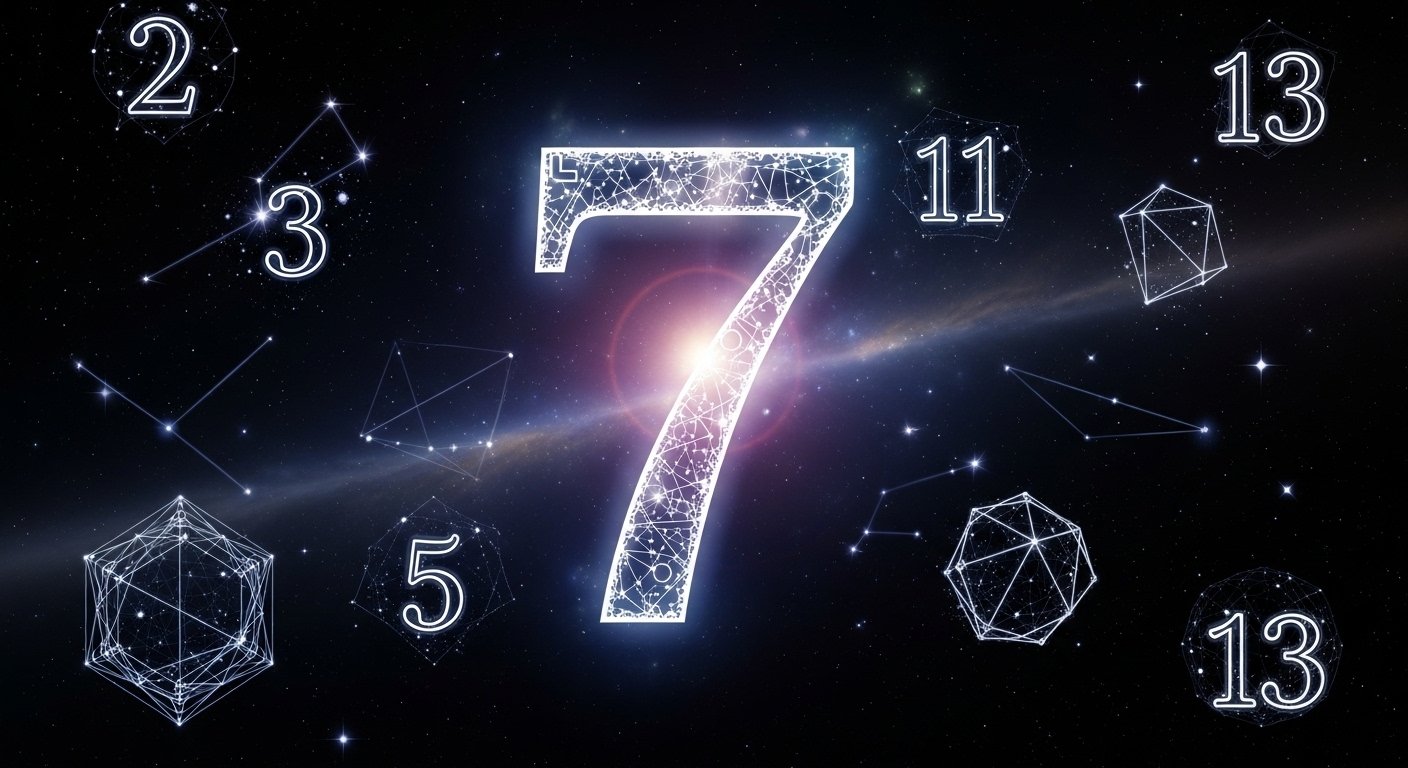
A prime number is a natural number greater than 1 that has no positive divisors other than 1 and itself.
The First 30 Prime Numbers
2, 3, 5, 7, 11, 13, 17, 19, 23, 29, 31, 37, 41, 43, 47, 53, 59, 61, 67, 71, 73, 79, 83, 89, 97, 101, 103, 107, 109, 113
All Prime Numbers Up to 100
2, 3, 5, 7, 11, 13, 17, 19, 23, 29, 31, 37, 41, 43, 47, 53, 59, 61, 67, 71, 73, 79, 83, 89, 97 (There are exactly 25 primes less than or equal to 100)
Fun & Important Facts
- 2 is the only even prime number (all other primes are odd).
- There are infinitely many prime numbers (proven by Euclid ~300 BC).
- Every integer greater than 1 can be written as a unique product of primes (Fundamental Theorem of Arithmetic).
- Primes are the foundation of modern cryptography (RSA, SSL/TLS, Bitcoin, etc.).
- Twin primes are pairs that differ by 2: (3,5), (5,7), (11,13), (17,19), (29,31), (41,43), (59,61), (71,73)…
Also Read: 5 letter Words Ending in E
Quick Ways to Use This
- School / Exams → memorize the first 25 (up to 100)
- Programming → great for testing sieve of Eratosthenes, primality tests, etc.
- Games / Puzzles → “find the next prime after 100”, “how many primes between 1–200?”, etc.
Want a bigger list? Just say the range you need:
- Primes up to 1000
- First 100 primes
- First 500 primes
- Primes between 1000 and 2000
- Twin primes, safe primes, Mersenne primes, etc.
Tell me exactly what you need, and I’ll give you a clean, ready-to-copy list instantly!